
What to do when a car USB says audio format not supported
If music plays on your Mac but disappears or fails in the car, this guide explains car USB audio unsupported, USB music not playing through MP3 settings, filenames, and USB folder structure.
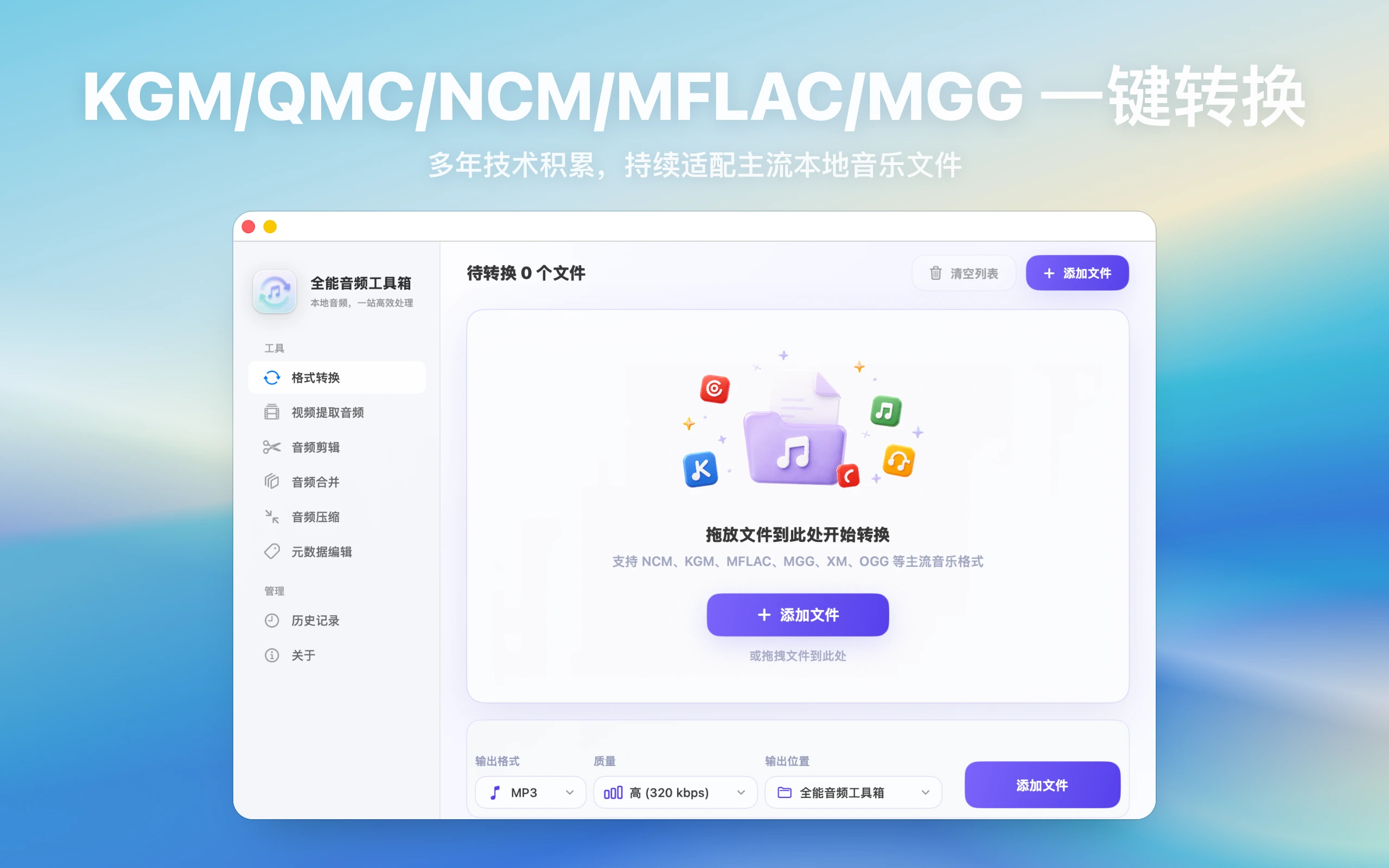
A real-world example
For example, if a car head unit only shows part of a playlist, the issue may be long filenames, deep folders, high bitrate, or USB compatibility. Test 10 tracks first instead of converting the whole drive repeatedly.
By the end, you should have a small verified car-test set instead of guessing formats.
What to do when a car USB says audio format not supported: direct answer
When a car USB player says an audio format is unsupported, check MP3 encoding, bitrate, sample rate, filenames, and folder depth first. If the task fits All-in-One Audio Toolbox, validate permission, output location, and the actual result with a small local sample before expanding to a full folder or daily workflow.
This guide is for Mac users searching “car USB audio unsupported” who need to evaluate capability, privacy boundaries, and failure conditions together.
How to decide whether this guide fits
When people search for “What to do when a car USB says audio format not supported”, the real question is usually where the local workflow is stuck. Use these scenarios to decide whether the article's process matches your case.
| Current situation | Why it matters | Suggested action |
|---|---|---|
| You need general playback or a car USB drive | MP3 is usually the most compatible target for car USB audio unsupported, USB music not playing. | Test a few files in the target player before converting a whole folder. |
| You want quality preservation or long-term archive | FLAC preserves more quality, while WAV is easier for editing. | Do not send every source straight to a low-bitrate MP3. |
| Files come from several music platforms or recording contexts | Grouping first prevents NCM, KGM, QMC, and regular audio from becoming one hard-to-debug batch. | Organize source, output, and retry folders before processing. |
If your case is not in the table, return to four basics: source, permission, target device, and privacy boundary. Once those are clear, tool choice and troubleshooting become much easier.
Start by identifying the file workflow
Before handling “car USB audio unsupported, USB music not playing”, check which app the file came from, what extension it uses, whether it is already saved locally, and where you want to play it afterward. That determines the output format, naming strategy, and troubleshooting path.
Why car players reject files
Car USB playback can fail because of uncommon formats, high bitrates, special characters in names, deep folder structures, or USB drive compatibility. Test a small set before converting a full playlist.
Recommended MP3 settings
For car use, compatibility matters more than extreme quality. MP3 with common sample rates, moderate bitrate, and simple names is usually more reliable across head units.
USB folders and filenames
Use shallow folders by playlist, artist, or album. Avoid overly long names and unusual symbols, then test sorting and Chinese-name display in the car before processing everything.
Recommended local workflow
- Create a test folder with two or three representative files instead of starting with the whole library.
- Check the extension, source app, local download state, and whether you have the right to process those local files.
- Choose MP3, FLAC, M4A, or WAV based on the target use; for cars and cross-device playback, test MP3 first.
- In All-in-One Audio Toolbox, choose a clear output folder, export the sample, and inspect duration, volume, filenames, and tags.
- After the sample passes, process the full batch and keep failed items in a retry folder for diagnosis.
For NetEase NCM-only tasks, start with the NCM to MP3 guide. For mixed sources, use this article's format boundaries before batching.