
How to choose MP3 settings for KGM files and car USB playback
If your files are Kugou KGM or KGMA and you want normal MP3 output on Mac, this guide starts from real KGM to car MP3, car USB MP3 bitrate failure cases instead of only listing formats.
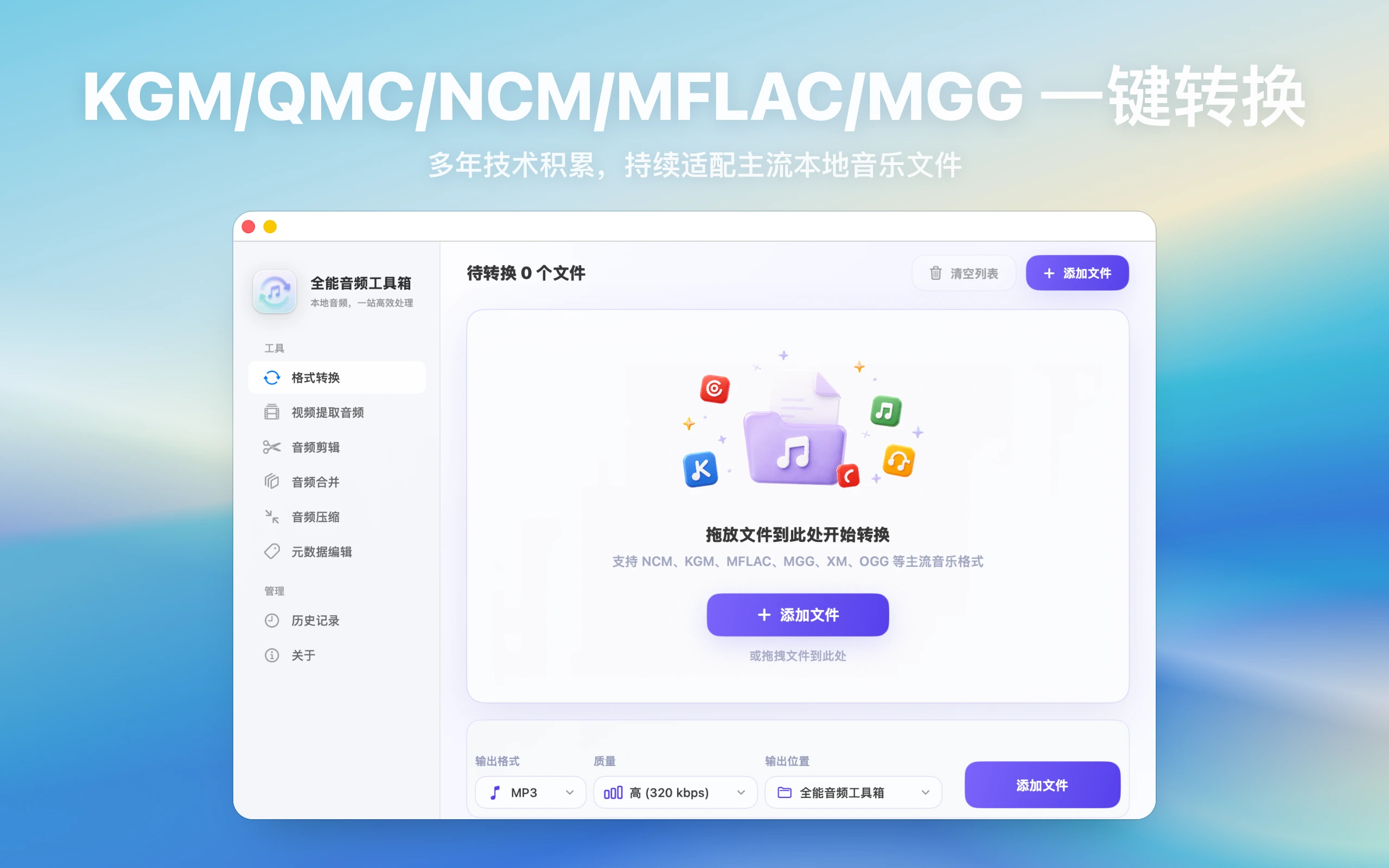
How to choose MP3 settings for KGM files and car USB playback: direct answer
When preparing KGM files for car USB playback, test a small set at 192 or 320 kbps and verify sample rate, filenames, and folder compatibility.
Decision: For car compatibility, test standard MP3, 44.1 kHz, and shallow folders first. 192 kbps saves space and 320 kbps favors music quality, but the head unit specification decides compatibility.
Steps for How to choose MP3 settings for KGM files and car USB playback
- Create a ten-track USB test set with short numbered filenames.
- Prepare 192 and 320 kbps samples and keep folder depth to two levels or fewer.
- Check scan time, non-Latin display, order, resume behavior, and complete playback in the car.
How to verify the result
- All test files remain visible after a cold start with correct order and duration.
- The result distinguishes audio settings from USB filesystem, capacity, or folder issues.
Limitations and stop conditions
Head units vary widely by model year, so no single setting works for every car.
A real-world example
For example, before converting an entire Kugou playlist for a car USB drive, choose a few KGM/KGMA samples with different lengths. Export MP3, test Chinese filenames, duration, and volume in the target player, then process the full folder.
By the end, you should know whether the issue is source integrity, permission, output folder, playback compatibility, or batch setup.
Start by identifying the file workflow
Before handling “KGM to car MP3, car USB MP3 bitrate”, check which app the file came from, what extension it uses, whether it is already saved locally, and where you want to play it afterward. That determines the output format, naming strategy, and troubleshooting path.
Format and capability boundaries
NetEase Cloud Music NCM, QQ Music QMC/MFLAC/MGG, Kugou KGM/KGMA, Ximalaya audio, Qingting FM, Lizhi, Xiaoyuzhou, audiobooks, podcasts, and editing-app assets come from different platform or content workflows. Before processing, confirm the source, file type, and rights, then choose a local conversion workflow, batch queue, and output format. All-in-One Audio Toolbox is positioned for broader music-format organization; for NetEase NCM-only workflows, see NCM Audio Converter.
How KGM and KGMA differ from regular audio
KGM and KGMA are common in Kugou local-file workflows and should not be treated the same as ordinary MP3 or FLAC files. Confirm extension, source folder, and file integrity before choosing MP3, FLAC, M4A, or WAV output.
A local Kugou to MP3 workflow
Put KGM and KGMA files in a separate folder, convert a few samples, and check the result in the target player. MP3 is usually safer for car USB, phones, and common players; WAV is useful when editing comes next.
No sound or conversion failure
Check file readability, external-drive permissions, output-folder access, disk space, and source integrity first. If output is silent, verify with multiple players before changing the whole batch workflow.
Common troubleshooting path
If the result is not right, do not expand the batch immediately. Reduce the issue to one file, one clipboard item, one preview target, or one display setup first.
- Read failure: check macOS file permissions, external-drive access, Downloads protection, and source integrity.
- Bad output: test another player or target app, then check format, bitrate, duration, and tags.
- Search misses: adjust filenames, metadata, keywords, or favorite rules instead of relying only on the original title.
- Unclear permission: review the privacy policy and product page for the local boundary.