
QQ Music MFLAC to FLAC or MP3: which output to choose
If you see QMC0, QMC3, QMCFLAC, MFLAC, or MGG and are not sure how they differ from ordinary audio, this guide explains MFLAC to FLAC, MFLAC to MP3 through format grouping and output choices.
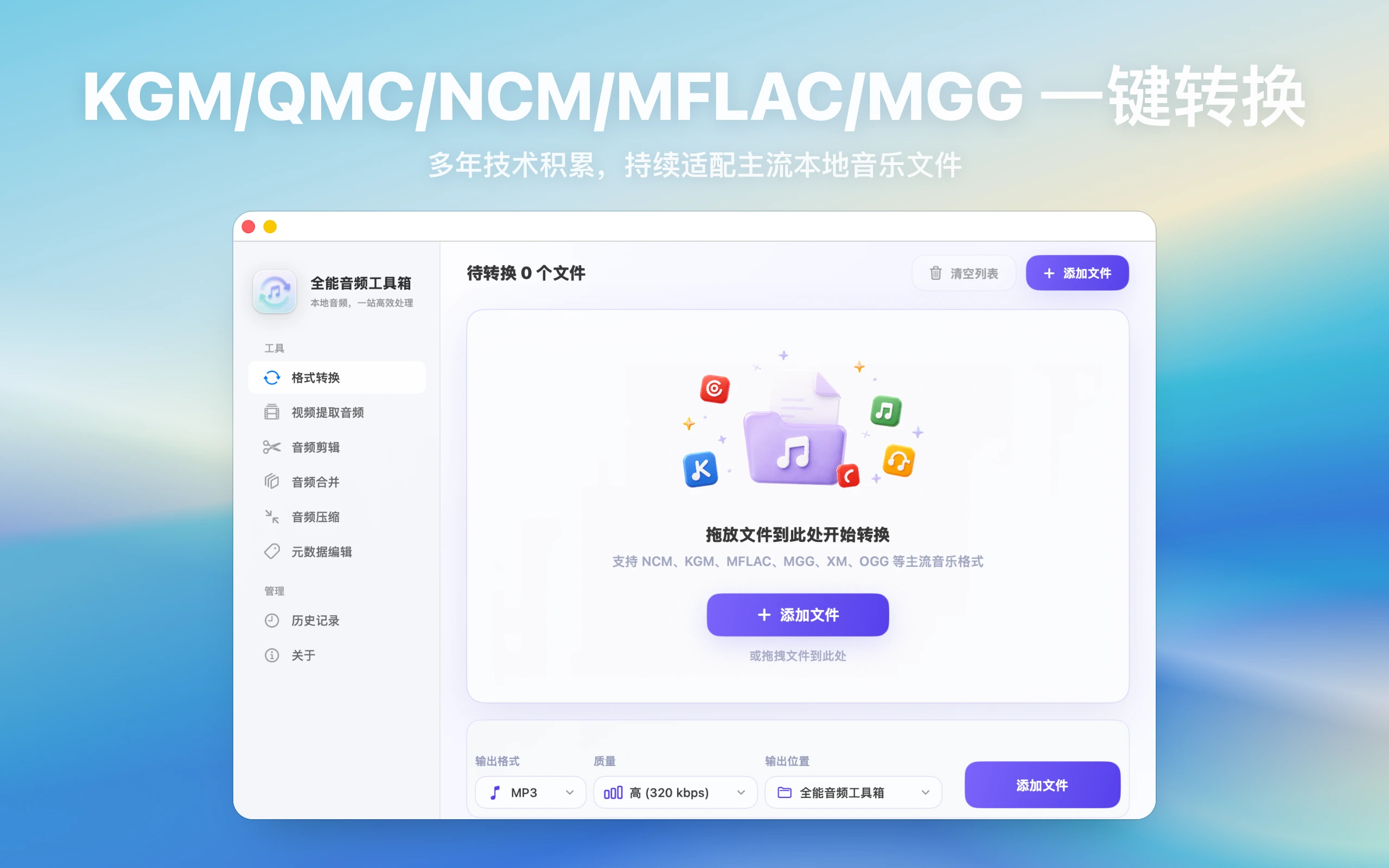
QQ Music MFLAC to FLAC or MP3: which output to choose: direct answer
When organizing MFLAC files, confirm playback and archive needs first; FLAC fits quality preservation, while MP3 fits broad playback.
Decision: Choose FLAC for archiving when the target player supports it; choose MP3 for cars, phones, and broad compatibility. An MFLAC filename alone does not prove the source retains full lossless quality.
Steps for QQ Music MFLAC to FLAC or MP3: which output to choose
- Pick one short and one long track from the same folder and record original size, duration, and source version.
- Export both FLAC and 320 kbps MP3, keep the source, and use clearly different filenames.
- Check duration, tags, volume, and playback in the real phone, car, and archive player before batching.
How to verify the result
- Both outputs play completely and non-Latin title, artist, album, and artwork remain usable.
- The choice is based on target devices and file purpose, not output size alone.
Limitations and stop conditions
Conversion cannot restore detail already missing from the source or guarantee support for every historical or restricted MFLAC variant.
A real-world example
For example, a folder that contains both MFLAC and MGG should not be treated as one anonymous batch. Group by extension first, export MP3 or FLAC based on purpose, then spot-check artist, album, and duration.
By the end, you should be able to group QQ Music files and choose the right output for playback or archiving.
Start by identifying the file workflow
Before handling “MFLAC to FLAC, MFLAC to MP3”, check which app the file came from, what extension it uses, whether it is already saved locally, and where you want to play it afterward. That determines the output format, naming strategy, and troubleshooting path.
Format and capability boundaries
NetEase Cloud Music NCM, QQ Music QMC/MFLAC/MGG, Kugou KGM/KGMA, Ximalaya audio, Qingting FM, Lizhi, Xiaoyuzhou, audiobooks, podcasts, and editing-app assets come from different platform or content workflows. Before processing, confirm the source, file type, and rights, then choose a local conversion workflow, batch queue, and output format. All-in-One Audio Toolbox is positioned for broader music-format organization; for NetEase NCM-only workflows, see NCM Audio Converter.
Separate QMC, MFLAC, and MGG first
QQ Music local files use several names: QMC, QMC0, QMC3, QMCFLAC, MFLAC, and MGG. Group files by extension and source before deciding whether MP3 compatibility or FLAC archiving is the better target.
MP3 or FLAC output
Choose MP3 for cars, phones, older players, and sharing. Choose FLAC when preserving more quality matters, especially with MFLAC or QMCFLAC-like files. A local tool is useful when several QQ Music formats need to be handled in one batch.
Batch organization
Use a source folder, an export folder, and a retry folder for failed items. After conversion, spot-check names, artists, albums, and duration so mixed QMC/MFLAC/MGG batches remain traceable.
Common troubleshooting path
If the result is not right, do not expand the batch immediately. Reduce the issue to one file, one clipboard item, one preview target, or one display setup first.
- Read failure: check macOS file permissions, external-drive access, Downloads protection, and source integrity.
- Bad output: test another player or target app, then check format, bitrate, duration, and tags.
- Search misses: adjust filenames, metadata, keywords, or favorite rules instead of relying only on the original title.
- Unclear permission: review the privacy policy and product page for the local boundary.