How to handle sensitive data in clipboard history
If you copied text, a link, a code snippet, or an image and then lost it after copying something else, this guide explains sensitive clipboard data, token cleanup through a real Mac clipboard workflow.
How to handle sensitive data in clipboard history: direct answer
Codes, client data, tokens, password fragments, and internal links should not remain in clipboard history long term.
Decision: When sensitive data enters clipboard history, shorten retention, use ignore controls available in the current version, and delete promptly instead of relying on hiding it from search.
Steps for How to handle sensitive data in clipboard history
- Use a fictional string such as `TEST-TOKEN-DELETE-ME` to test capture and cleanup—never a real credential.
- Review whether password managers, terminals, remote desktops, and client systems should be ignored.
- Create an immediate-deletion or frequent-cleanup habit for codes, tokens, internal links, and client data.
How to verify the result
- After deletion, the fictional sensitive item stays absent from search, favorites, filters, and post-restart history.
- Before and after changing ignore controls, observed behavior matches current-version documentation.
Limitations and stop conditions
The page cannot guarantee every third-party app marks sensitive clipboard content correctly; users still control copy behavior and cleanup frequency.
A real-world example
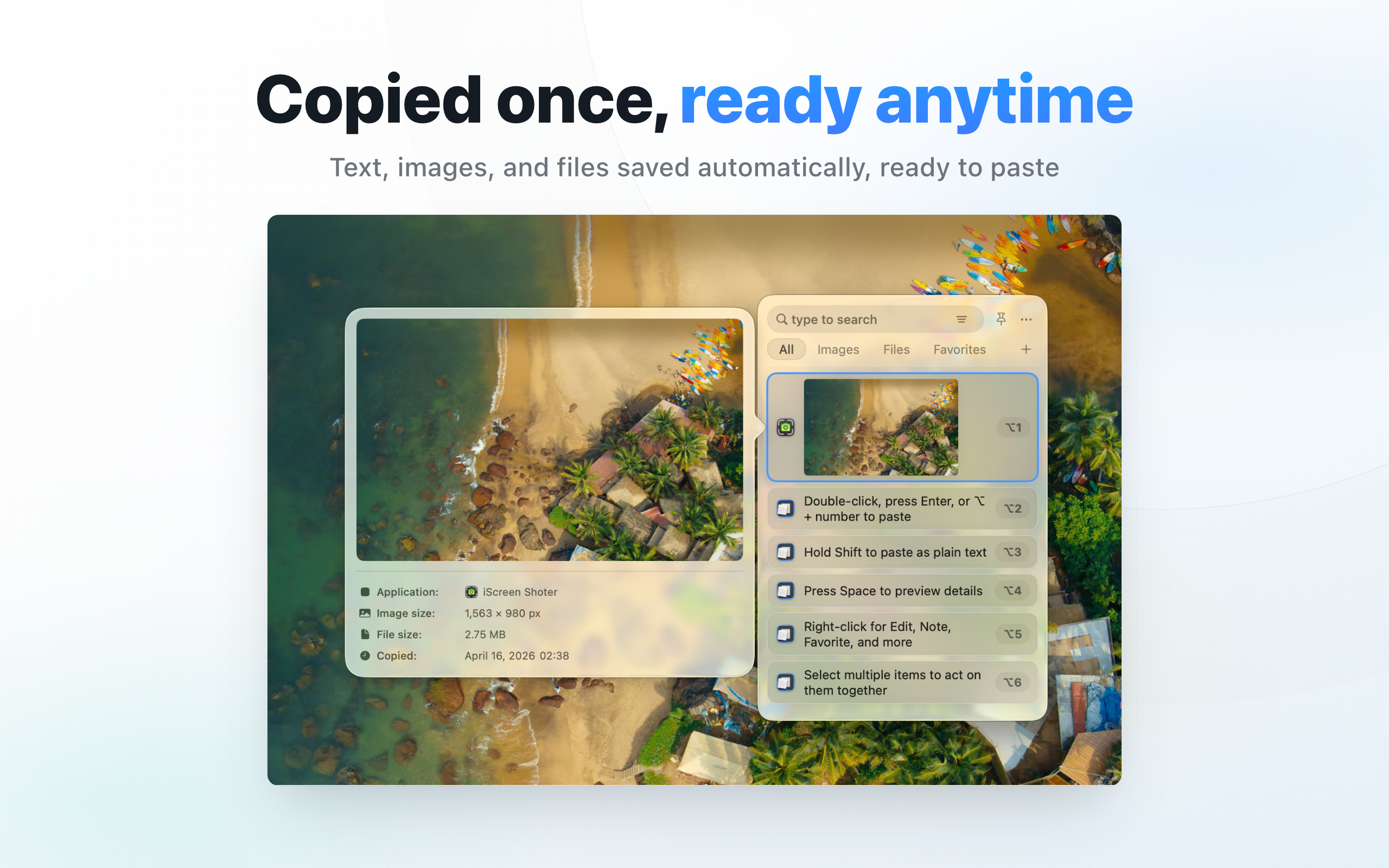
For example, while writing a document you may copy a client name, then a browser link, then an email paragraph. The system clipboard keeps only the last item. CopyHistory turns those small copy actions into searchable history that can be found by keyword, type, or favorite status.
By the end, you should know which clipboard items are worth keeping, which should be cleaned, and how to avoid retaining sensitive entries.
Start with the clipboard problem
For “sensitive clipboard data, token cleanup”, the goal is not format conversion. The practical value is recovering overwritten content, finding reusable snippets, searching copied links or images, and controlling what the clipboard history stores.
Daily workflow
Keep frequent text, links, code snippets, and image items easy to scan. Pin or favorite reusable items, and clean up old entries so search results stay useful.
Privacy and permissions
Clipboard data can include codes, links, client notes, or temporary snippets. Review storage behavior, ignore rules, and local data boundaries before relying on the tool.
Common troubleshooting path
If the result is not right, do not expand the batch immediately. Reduce the issue to one file, one clipboard item, one preview target, or one display setup first.
- Read failure: check macOS file permissions, external-drive access, Downloads protection, and source integrity.
- Bad output: test another player or target app, then check format, bitrate, duration, and tags.
- Search misses: adjust filenames, metadata, keywords, or favorite rules instead of relying only on the original title.
- Unclear permission: review the privacy policy and product page for the local boundary.