Why preview archives before extracting
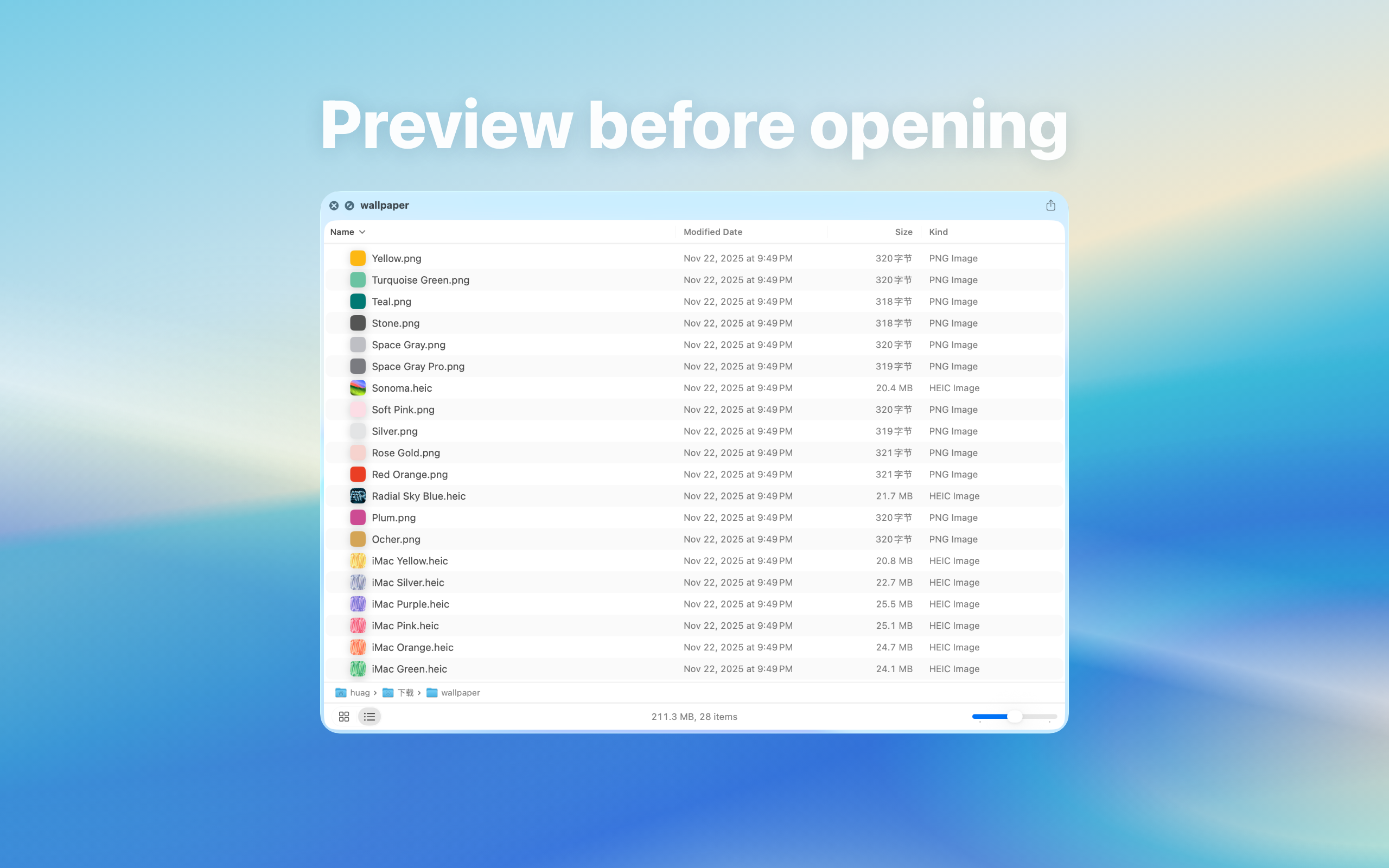
If you only want to see what is inside a folder, whether an archive is worth extracting, or whether a Markdown or ebook file is the right one, this guide puts archive preview, ZIP preview into a real Finder workflow.
Why preview archives before extracting: direct answer
Inspecting archive structure first helps avoid extracting unwanted files into a work folder.
Decision: Previewing an archive before extraction confirms structure, file count, and whether the target exists, reducing unnecessary extraction and workspace clutter.
Steps for Why preview archives before extracting
- Prepare a normal ZIP, a nested ZIP, and a larger lawful test archive.
- Press Space and inspect top-level folders, filenames, extensions, and suspicious duplicate paths.
- Extract only after confirming content, destination, and free space; security-check unknown sources first.
How to verify the result
- The previewed file list matches a test extraction and non-Latin names and hierarchy remain readable.
- Encrypted, damaged, or unsupported archives fail clearly instead of appearing as empty archives.
Limitations and stop conditions
Preview does not replace malware scanning and cannot guarantee encrypted, split, or damaged archives are readable.
A real-world example
For example, several similarly named archives in Downloads can waste time and disk space if each one is extracted. With Quick Preview, previewing the structure first helps you decide which archive to open, move, or delete.
By the end, you should know when pressing Space is enough and when a dedicated app is still needed.
Identify the preview target first
For “archive preview, ZIP preview”, start by checking whether the target is a folder, archive, Markdown file, ebook, or project directory. Each type has a different preview goal.
When previewing is faster than opening
Downloads, project assets, archives, and document collections often only need a quick structural check. Quick Look preview reduces unnecessary app switching, extraction, and accidental opens.
Local preview boundary
File structure, document text, and archive listings are local data. A local Quick Look extension lets you inspect them without uploading files to a web service.
Common troubleshooting path
If the result is not right, do not expand the batch immediately. Reduce the issue to one file, one clipboard item, one preview target, or one display setup first.
- Read failure: check macOS file permissions, external-drive access, Downloads protection, and source integrity.
- Bad output: test another player or target app, then check format, bitrate, duration, and tags.
- Search misses: adjust filenames, metadata, keywords, or favorite rules instead of relying only on the original title.
- Unclear permission: review the privacy policy and product page for the local boundary.