What to do when the Mac Dock keeps moving to another display
If your Dock moves to another display after an edge gesture, or interrupts presentation and full-screen work, this guide explains Dock keeps moving, Dock moves display through a multi-display Mac setup.
What to do when the Mac Dock keeps moving to another display: direct answer
A Dock that keeps moving is usually tied to edge gestures, display layout, and full-screen workflows, so start by recording triggers.
Decision: Dock movement between displays is commonly triggered when the pointer reaches another display's bottom activation area. Record display geometry, Dock position, and the exact pointer path before choosing a fix.
Steps for What to do when the Mac Dock keeps moving to another display
- Map the left/right or above/below display arrangement and record the main display and Dock edge.
- Without the utility, reproduce three to five times and record pointer path, full-screen state, and frequency.
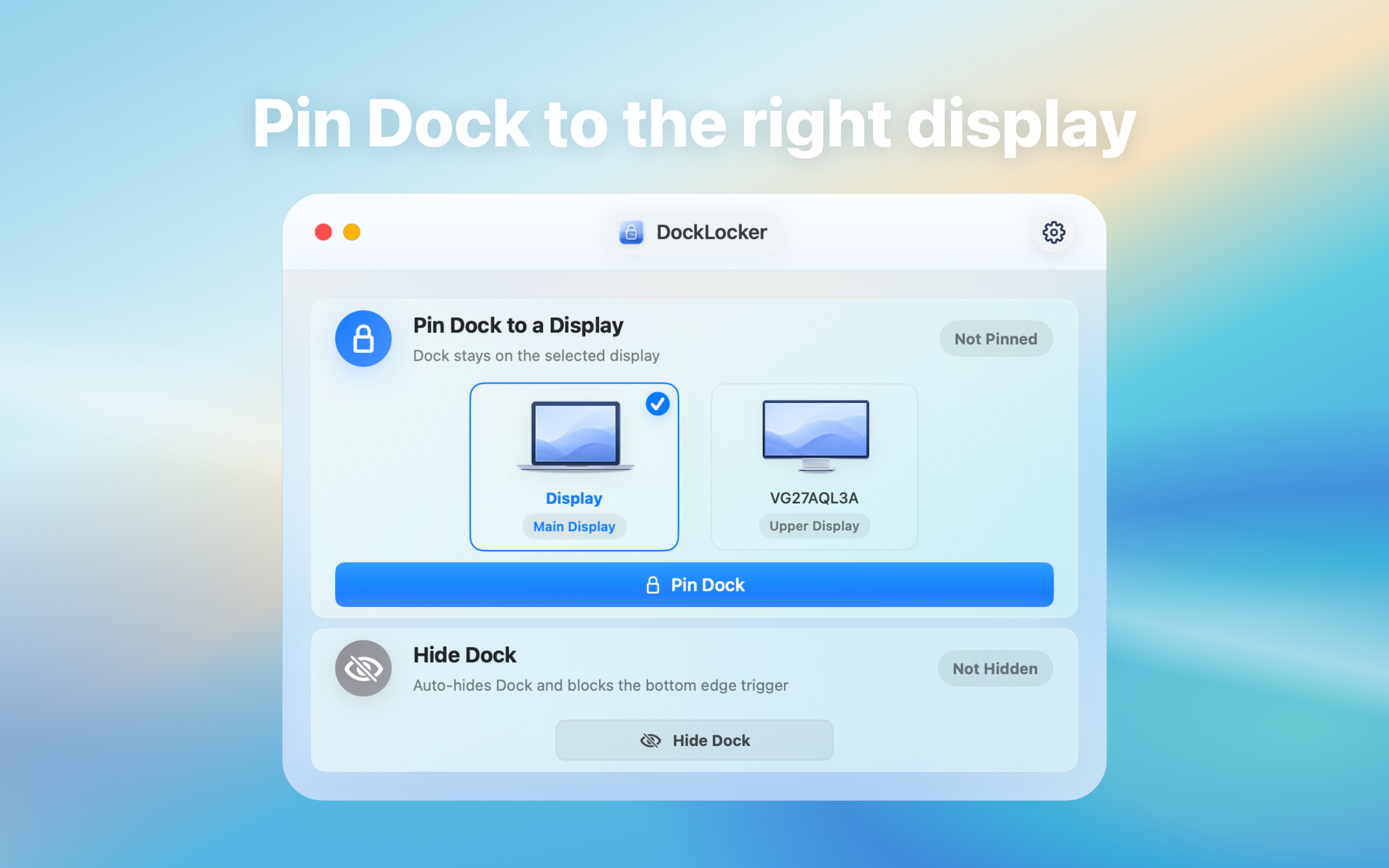
- Enable DockLocker, grant the required permission, and repeat with the same layout and pointer path.
How to verify the result
- Trigger counts before and after are comparable and Command-Tab, full-screen, and display switching gain no new conflict.
- Retest after sleep/wake, reconnecting displays, and restart instead of relying on one session.
Limitations and stop conditions
macOS imposes its own display-geometry and Dock-placement limits, so no utility should promise every arrangement works.
A real-world example
For example, with a main display on the left and an external display on the right, pointer movement between screens may trigger the Dock unexpectedly. DockLocker is not meant to replace macOS navigation; it reduces that specific interruption.
By the end, you should know whether Dock locking fits your setup and what to check before granting Accessibility permission.
Confirm where Dock interruptions happen
For “Dock keeps moving, Dock moves display”, check whether the issue appears with multiple displays, presentations, full-screen work, or accidental edge gestures. The screen layout and working posture matter.
Dock locking workflow
Install the app, grant the required macOS permissions, and tune behavior around your display setup. The goal is to reduce accidental Dock movement or activation, not to replace normal macOS navigation.
Permission notes
Dock utilities may need local system permissions to detect and constrain interactions. Review the product page, privacy notes, download source, and update path before relying on it.
Common troubleshooting path
If the result is not right, do not expand the batch immediately. Reduce the issue to one file, one clipboard item, one preview target, or one display setup first.
- Read failure: check macOS file permissions, external-drive access, Downloads protection, and source integrity.
- Bad output: test another player or target app, then check format, bitrate, duration, and tags.
- Search misses: adjust filenames, metadata, keywords, or favorite rules instead of relying only on the original title.
- Unclear permission: review the privacy policy and product page for the local boundary.